Humber Valley Garage Door Co.Bulletin 3 of 3Toronto, Ontario
Garage Door Manual Lock Repair: what the visit covers
Many lock complaints turn out to be door complaints.
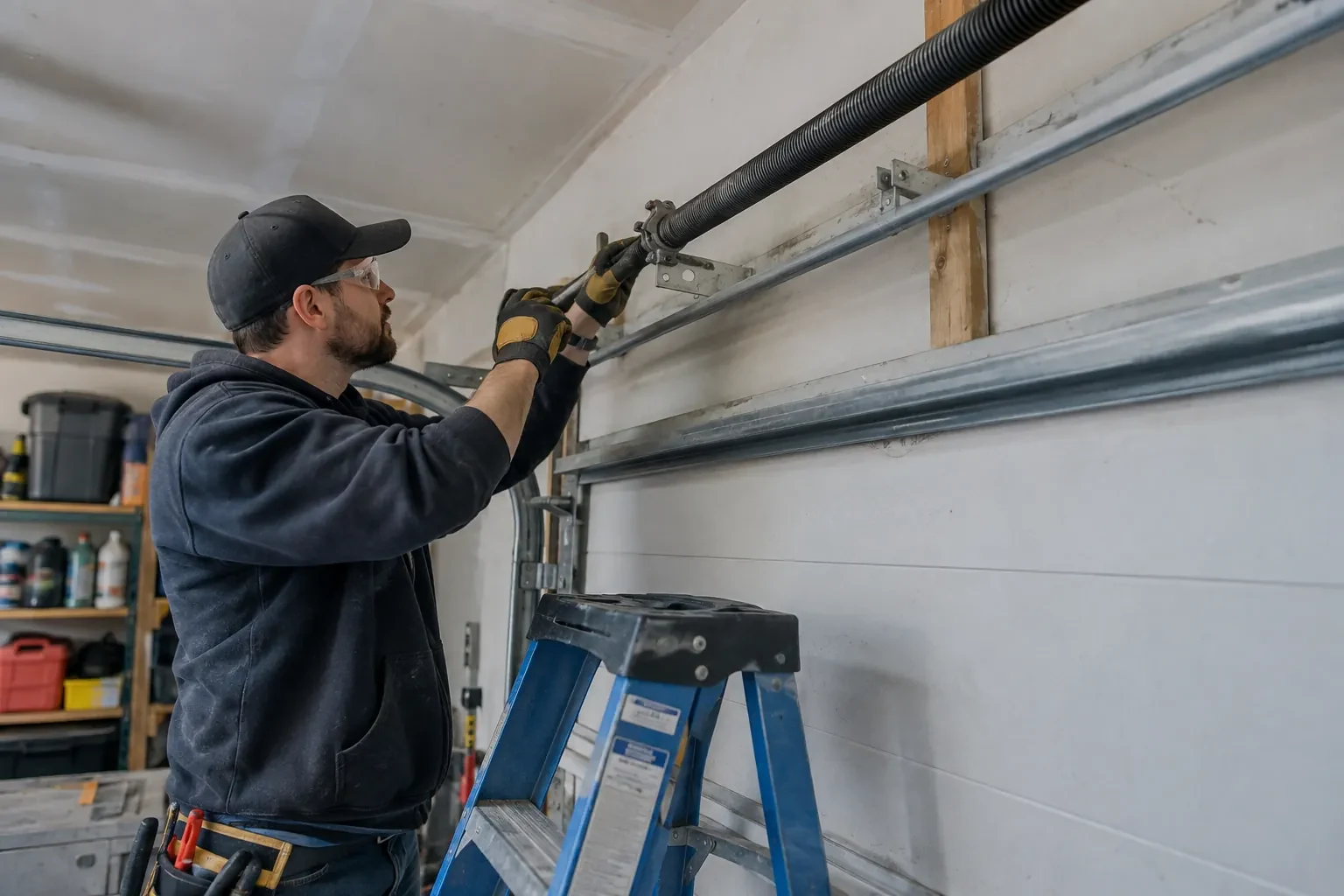
Many lock complaints turn out to be door complaints. The bar on a slide lock or a T-handle has to land in a small slot, and it only gets there if the door stops exactly where it stopped when the lock was fitted. A floor that has heaved, a track bracket that has loosened, a bottom seal that has flattened, or ice under the door all shift that landing point. The visit begins with the door: closed by hand, checked for level and for how it meets the floor and the tracks. With the door where it belongs, the lock often needs only a small adjustment to its guides.
How the lock is fixed to the door
The lock lives on the door section, and the section has to hold it. On a steel door the technician checks whether the screws through the thin skin have pulled and left oval holes, whether the handle base is cracked, and whether the section around the cutout has creased. On a wooden door the check is for softness and rot around the handle and along the stile where the bar guides are screwed, and for a handle that spins in an oversized hole. Insulated doors are measured for thickness so the replacement spindle and through-bolts reach. This tells the technician whether ordinary screws will hold again or whether carriage bolts and backing plates are needed for a lasting fix.
Freeing and renewing the bars and guides
Bars that have stiffened are worked loose with penetrating oil and then cleaned back to bare metal, while guides packed with rust are removed, cleaned or replaced with new ones fixed into sound material. A bar that has kinked is replaced rather than straightened, since spring steel that has been bent once takes a set and binds forever after; the new bar is cut to suit the door's width so it reaches through the track with a comfortable margin and retracts fully clear. Both bars are set to the same throw so the door locks evenly on both sides. A light film of silicone on the bars, not grease, finishes the job.
A monthly lock check that takes a minute
Once a month, with the door closed and the opener disconnected, throw the lock and release it a couple of times. You are listening for a clean click, feeling for any new stiffness, and looking at the bar ends to see they still pass through the centre of their slots. Then confirm the bars sit fully back before reconnecting the opener. A bar that has started to drag or a bolt that lands at the edge of its hole is telling you the door or a guide has shifted a little, and a small adjustment at that stage is all it takes. A wipe of the slot edges with a rag keeps rust from getting a start.