Sound familiar?Glen Agar
- The call
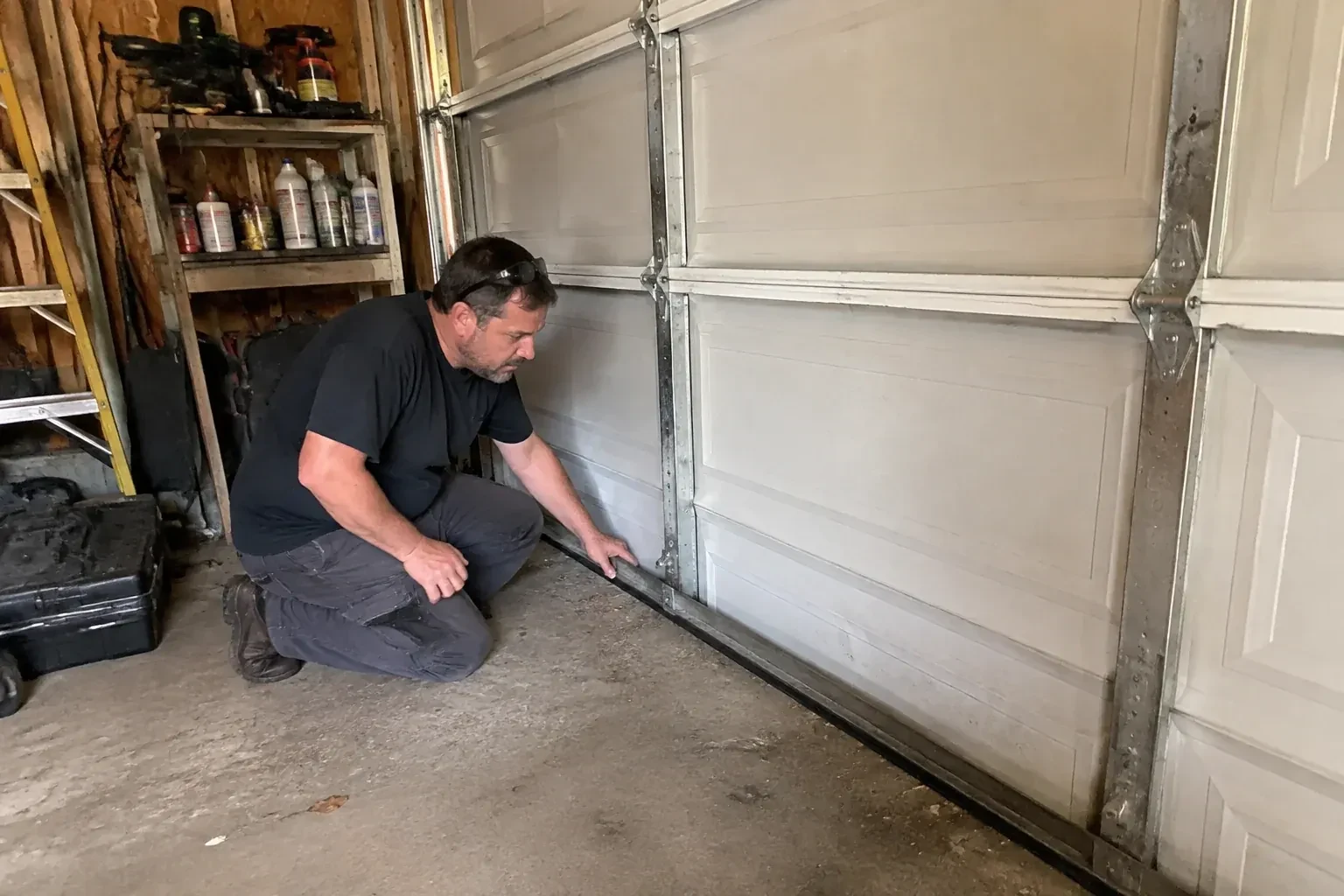
- On the old wood door, one hinge has pulled away from the panel, dragging a screw and a chunk of soft timber with it. The panel sags slightly at that joint and the door bumps at the curve instead of gliding.
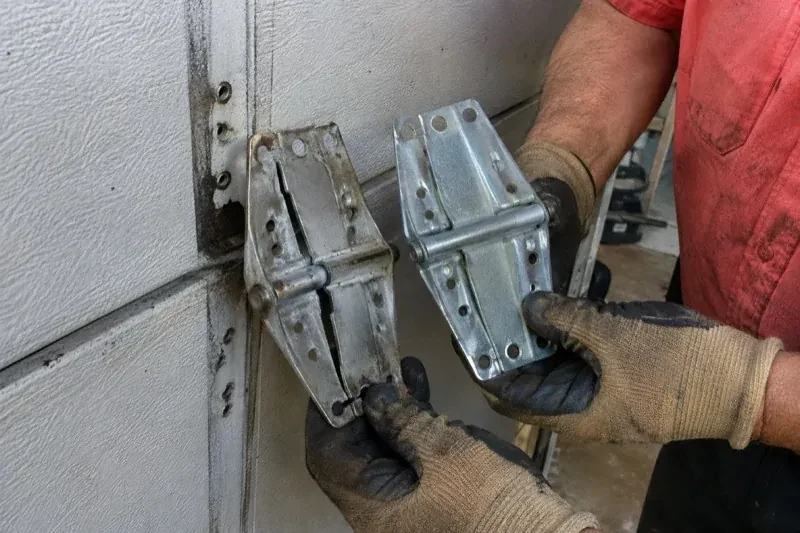
A hinge visit runs in a settled order. The opener is disconnected and the door is left closed, because with the panels stacked on one another and the bottom resting on the floor, the hinges are carrying very little. The technician looks at every hinge on every joint and checks the rollers and the screw holes at the same time. Worn hinges are then changed one at a time so the door is never without a joint, each new part matching the number and gauge of the old. Then the door is run by hand, checked for a flush fit and balance, and the opener is reconnected and tested.
Sound familiar?Glen Agar
Garage Door Hinge Replacement · Glen Agar
Scene 1
Wide doors depend on their centre hinges and struts to keep each panel flat. The technician counts the hinges on each joint against the door's width, since a double door with only one centre hinge, or a wide panel with no strut, flexes on every cycle and pulls at its hinge screws. The steel around each hinge is checked for hairline cracks or oil-canning, and a wood door for splits along the grain near the fasteners. Where a strut is missing or a joint is short a hinge, adding one is discussed as part of the plan, because stiffening the panel is what keeps the new hinges tight.
Scene 2
An edge hinge holds the roller in the track, so the roller comes with it. The technician steadies the panel with a clamp, backs out the hinge screws, then eases the roller stem out of the hinge tube while tilting the wheel clear of the track, or loosens a track bracket a fraction to make room. The old hinge comes off, the new one of the same number goes on with the roller stem seated in its tube, the wheel is guided back into the track, and the hinge is fastened. Both edge hinges on a joint are handled this way, one after the other, with the panel alignment rechecked between them.
Scene 3
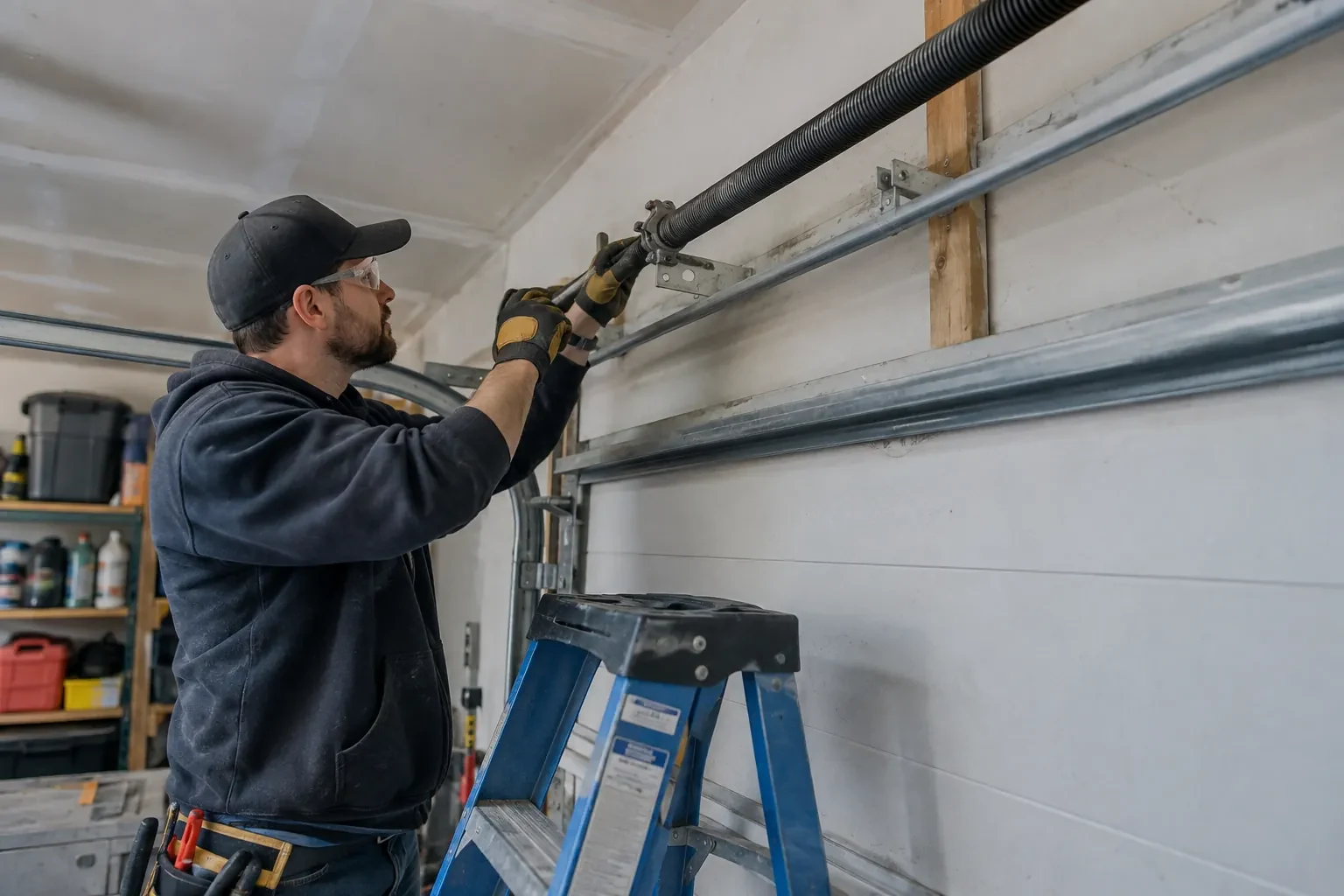
You can confirm the door is balanced without touching a spring. With the door closed, pull the opener's release cord, lift the door by its handle to about waist height and let go gently. It should stay roughly where it is. A door that sinks or climbs on its own is telling you the springs are out of step with the door's weight, and a door dragged by the opener is what wears hinges early, so book an adjustment. Reconnect the opener the way its manual describes, usually by running it once. Doing this each season keeps both the hinges and the opener working lightly.
What shapes the quoteHumber Valley Garage Door Co.
FeesSame any hour
They are checked every time and replaced when they need it. The roller stem sits in a tube on the edge hinge, so when that hinge comes off the roller is already in hand, and fitting a new one adds a minute. A wheel that is cracked, flat-spotted or grinding on its bearing is the sort of thing that strained the hinge, so leaving it would ask the new hinge to carry the same load.
The two panels at that joint are no longer being held together on one side. A hinge that has cracked through, pulled its screws or lost its pin lets the panels hinge open around the remaining hardware, and the gap shows as they round the curve where the joint flexes most. Replacing the failed hinge, and checking its partner on the other end, brings the panels back into line.
Count the joints between panels and multiply. A single door usually carries two edge hinges and one centre hinge per joint, so a four-panel door has three joints and nine hinges. A double door adds one or two more centre hinges per joint to keep the wider panels flat. The top panel uses adjustable top fixtures rather than hinges, and the bottom corners use bottom brackets, which are different parts.
TorontoOntario
Garage Door Hinge Replacement · Toronto, Bloordale Gardens, Eringate, Etobicoke, Islington, Princess Margaret, Thorncrest Village, West Deane Park
Every square is one home in a hundred.
On-site assessment
The roller at the top of the second panel is leaning outward and only half of the wheel is still in the track.
(289) 804-5885, open 24/7.
On-site assessment preferred · (289) 804-5885, open 24/7