Skip to content
HumberValley Garage Door Co.Open 24/7 (289) 804-5885
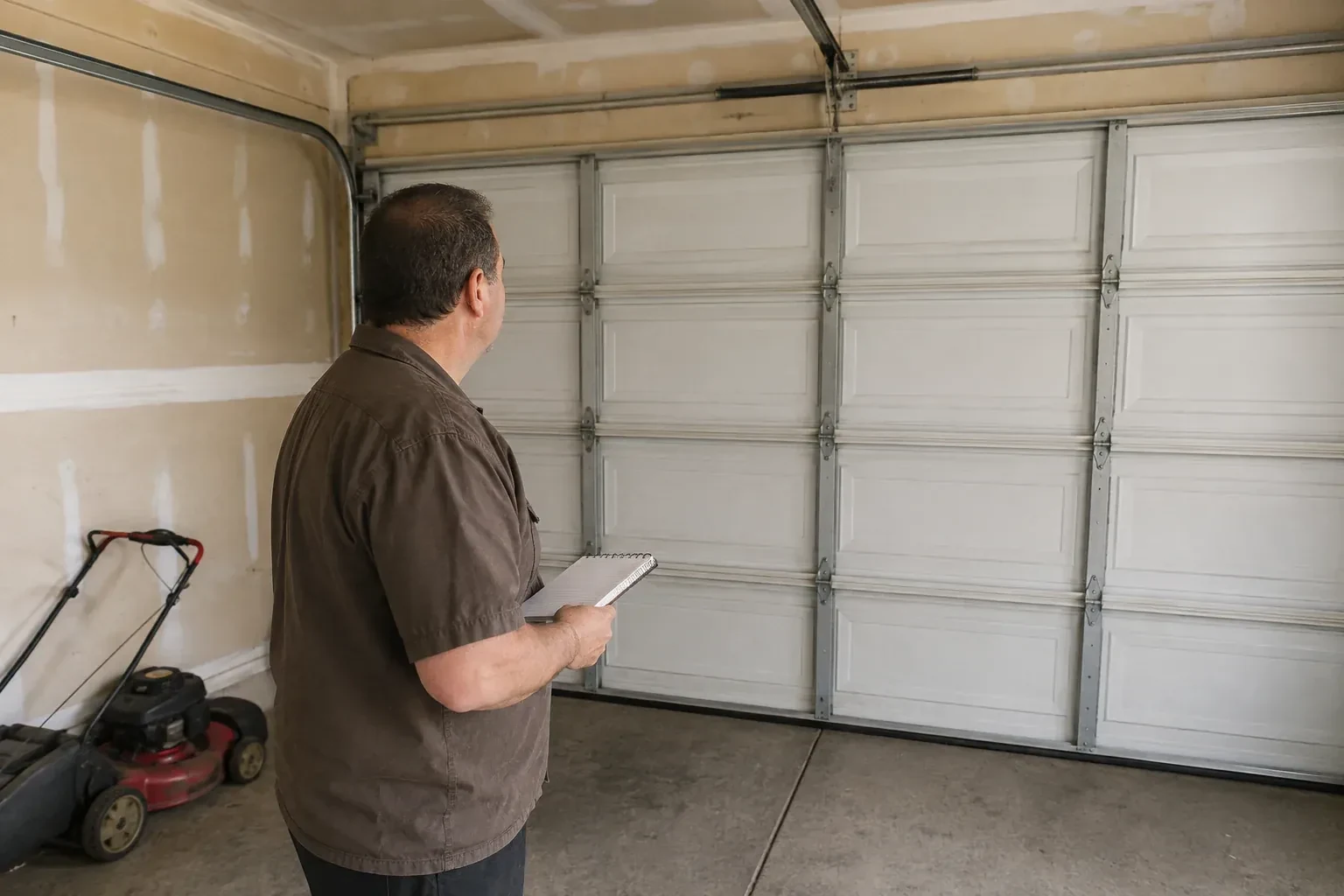
Technician holding a notebook while looking at a closed sectional door. — Garage Door Balance Adjustment, Etobicoke

Springs · Etobicoke

Garage Door Balance Adjustment

The opener has started to groan on the way up. The door climbs slowly, hesitates near the top, and on the way down it sometimes stops a hand's width above the floor and reverses, as if something were in the way when nothing is.

In plain words

The whole service is built around one simple test that door manufacturers and safety bodies describe the same way. With the opener released, the door is lifted by hand to roughly a metre off the floor and let go. A balanced door stays where it is. One that drifts upward is carrying too much spring tension; one that sinks is carrying too little. The technician reads that behaviour at several heights, checks the door is level across its width, and then adjusts the counterbalance a quarter turn at a time, testing to the manufacturer's specified height and tolerance, until the door meets that standard and moves smoothly.

Sound familiar?Etobicoke

The call
Released from the opener, the door will not hold anywhere. Lift it to hip height, take your hands away, and it sinks back to the concrete, gathering speed on the way down. Two years ago it used to hover exactly where you left it.
NextHow the visit goes

Garage Door Balance Adjustment · Etobicoke

How the visit goes

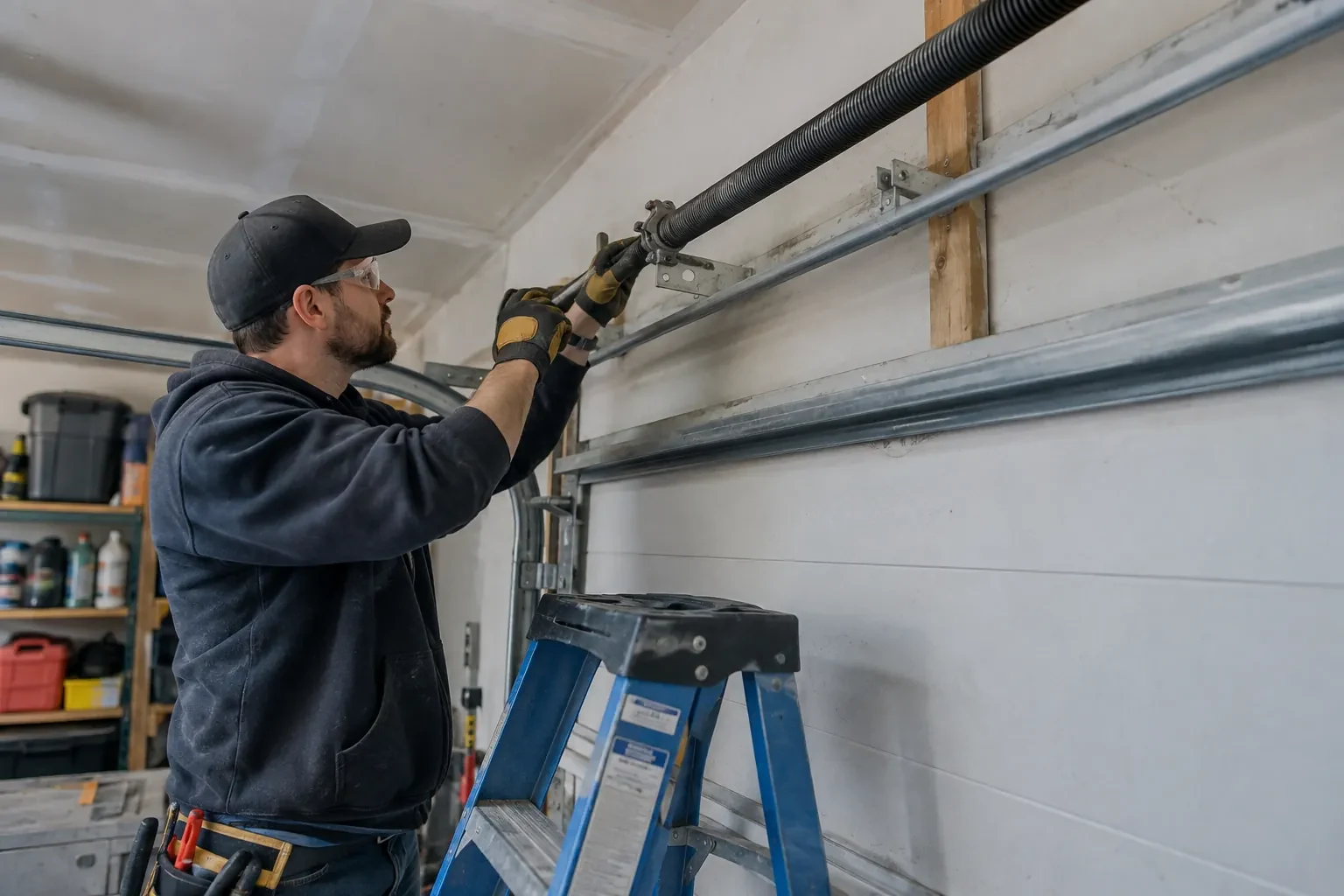
Technician in safety glasses and tan-patched gloves fitting tools to a spring bracket above a gray door, beside a blue stepladder. — Etobicoke
  1. Scene 1

    Friction along the path

    Some doors that feel heavy are not short of spring tension at all; they are dragging. The technician runs a hand and an eye along the vertical and horizontal tracks for dents, misaligned joints and brackets that have pulled away from the jamb, spins each roller to find seized bearings or cracked wheels, and flexes each hinge for play or splits. Dry, worn rollers alone can add real effort to every lift. Binding at one point in the travel, rather than heaviness everywhere, is the signature of a friction problem, and correcting it first means the springs are then adjusted to the door's true weight rather than to the drag.

  2. Scene 2

    Resetting the cables so the door sits level

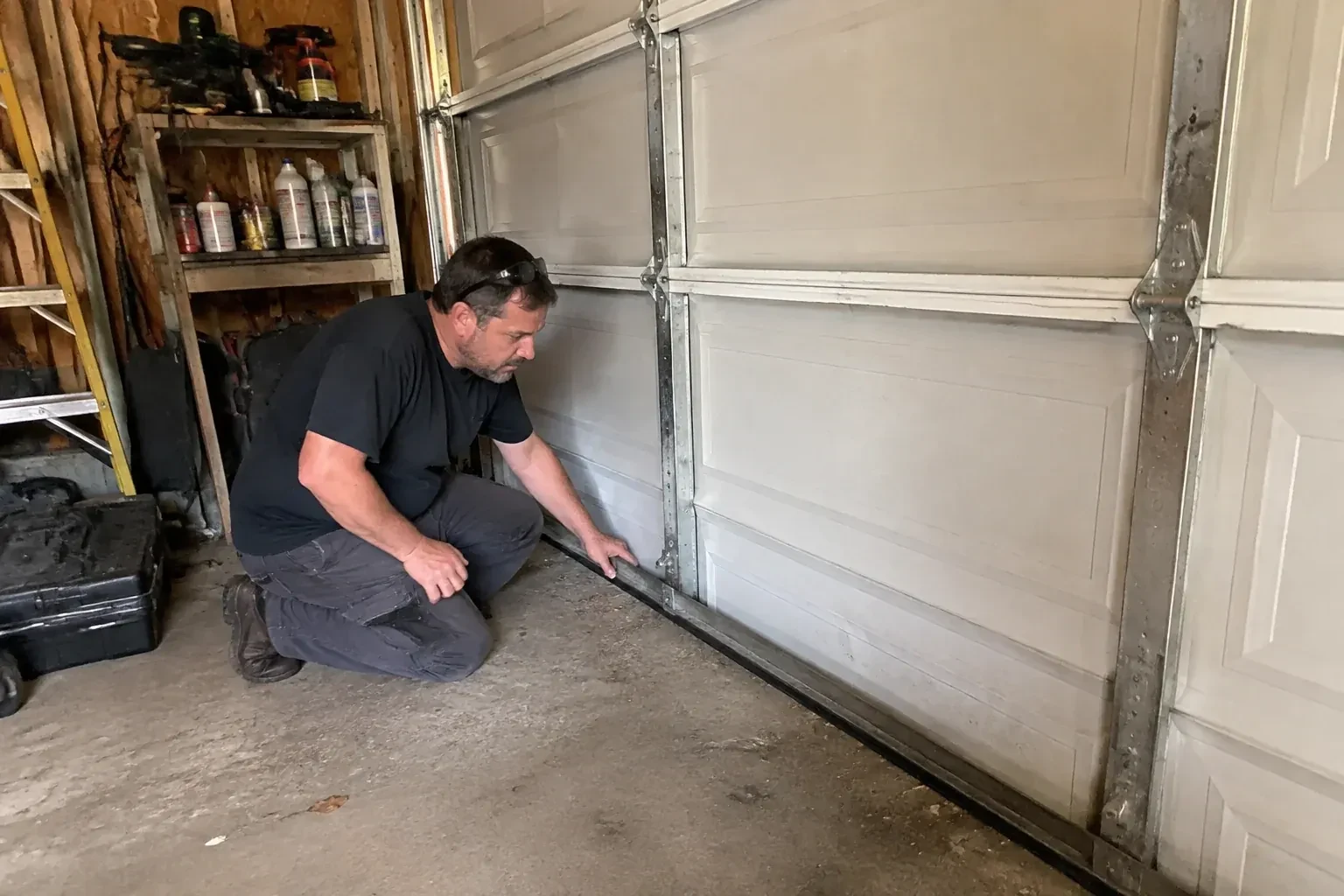
    If one corner of the door sat high, that is corrected before the final tension is set. The technician releases the spring tension enough to take the load off the drums, loosens the set screws on the drum on the low side, takes up or lets out cable until the door is level, and locks the drum again with the cable seated snugly in its groove. The bottom of the door is checked against the floor along its whole width, and both drums are confirmed to show the same number of wraps. Only then is the spring tension brought back up, because tension applied to a crooked door simply loads one side more.

  3. Scene 3

    A door that is nearly weightless again

    The difference is obvious the first time you lift the door by hand. It rises with light effort, pauses when you stop it, and stays fully open without drifting down. Closing it, the bottom seal meets the slab evenly along its length instead of thudding at one corner. Under power, the opener runs quieter because it is guiding a balanced door rather than hauling one, and it stops reversing near the floor for no reason. The door also moves at the speed of your hand, neither racing ahead nor dragging, which is exactly what the industry checklist describes as correct operation.

In the van

  • Door scale
  • Track clamps or locking pliers
  • Extension springs and S-hooks
  • Containment cables
  • Garage-door lubricant

What shapes the quoteHumber Valley Garage Door Co.

Adjustment or replacement
If the inspection shows springs that can be wound to the door's weight, the quote covers adjustment. Springs that are undersized or worn out mean replacement, which is priced as separate work and explained first.
Corroded or seized fasteners
Set screws and cone screws that have rusted solid take time to free, and badly corroded hardware is replaced rather than reused, which shows in the parts list.
Single or double door
A double door commonly carries more spring than a single, but the exact count follows the manufacturer's engineered hardware package for that door's weight rather than width alone: one, two or more torsion springs, or one or two extension springs per side. More springs means more adjustment and testing.

FeesSame any hour

Have it ready

Before you call · 0 / 3

(289) 804-5885

Have a question?

How is door balance tested?

With the door closed, the opener is released so the door is free. It is lifted by hand to about a metre, then to fully open, and let go at each point. A door in balance holds its position; one that rises on its own is over-tensioned and one that drops is under-tensioned. The door should also move freely and no faster than the hand pushing it.

How often does a garage door need a balance adjustment?

There is no fixed interval; the door tells you. Many doors go years between adjustments, especially when they are lubricated and the springs were sized correctly. A hand test each season is the reliable guide: if the released door holds at about a metre and stays fully open, it is fine. When it starts to drift or sink, that is the time.

Can the opener's force setting be turned up instead of adjusting the springs?

The opener is built to move a balanced door, and its force limit is what makes it stop and reverse on contact. Raising that limit to lift a heavy door pushes the safety behaviour out of its intended range and works the motor and gears hard. The sound order is to balance the door first, then set the opener to suit it. Both are done in the same visit.

Etobicokeinformation

TorontoOntario

Town
Etobicoke, Toronto
In business
22 years
Hours
Open 24/7
Nights, weekends and holidays, same fees
Visits
On-site assessment preferred. Request a visit or call.

2021 census: what it means at the door

Every square is one home in a hundred.

  • 58 in 100 homes · older homes
  • About 58% of homes in Toronto were built in 1980 or earlier, according to the 2021 Census.Extension springs are common on older doors, and they should carry a safety cable through the middle so a broken spring is held rather than flung. Adding those cables is a small job the technician checks for and offers on any older door he services.
  • Single-detached houses make up about 23% of homes in Toronto (2021 Census).Townhouse rows generally have a narrow single door on each unit, with shared walls on both sides. Noise from a chain opener or dry rollers carries straight into the neighbour's home, so quiet belt-drive openers and nylon rollers are a popular and considerate choice here.

Source: Statistics Canada, Census Profile

Open Etobicoke in Google Maps

On-site assessment

Request a visit.

The opener has started to groan on the way up.

(289) 804-5885, open 24/7.