Sound familiar?Thorncrest Village
- The call
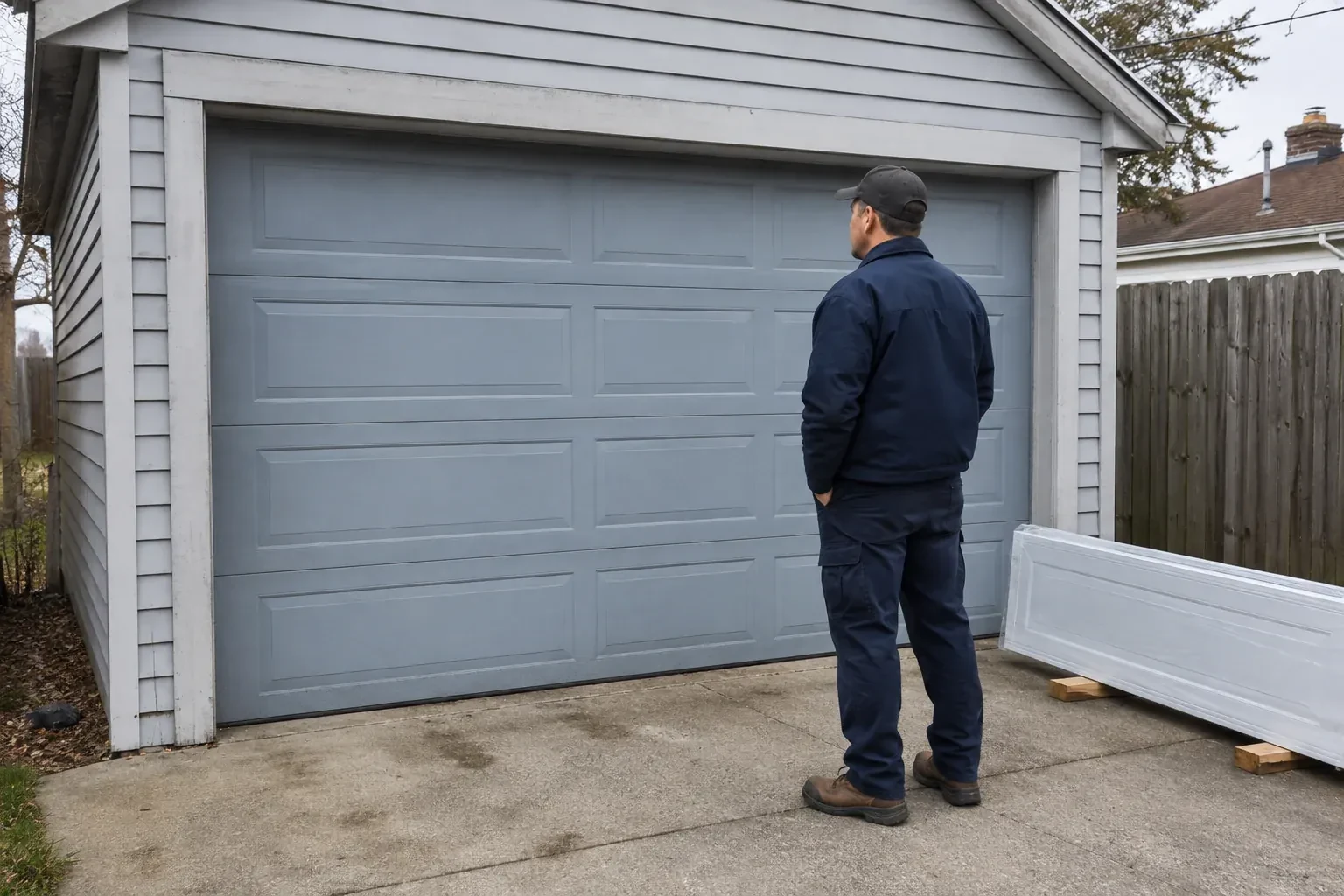
- Your garage door works, yet its broad plain panels feel disconnected from the brick, gables and entry details around them. You want the opening to contribute the warmth and character of the home's exterior.
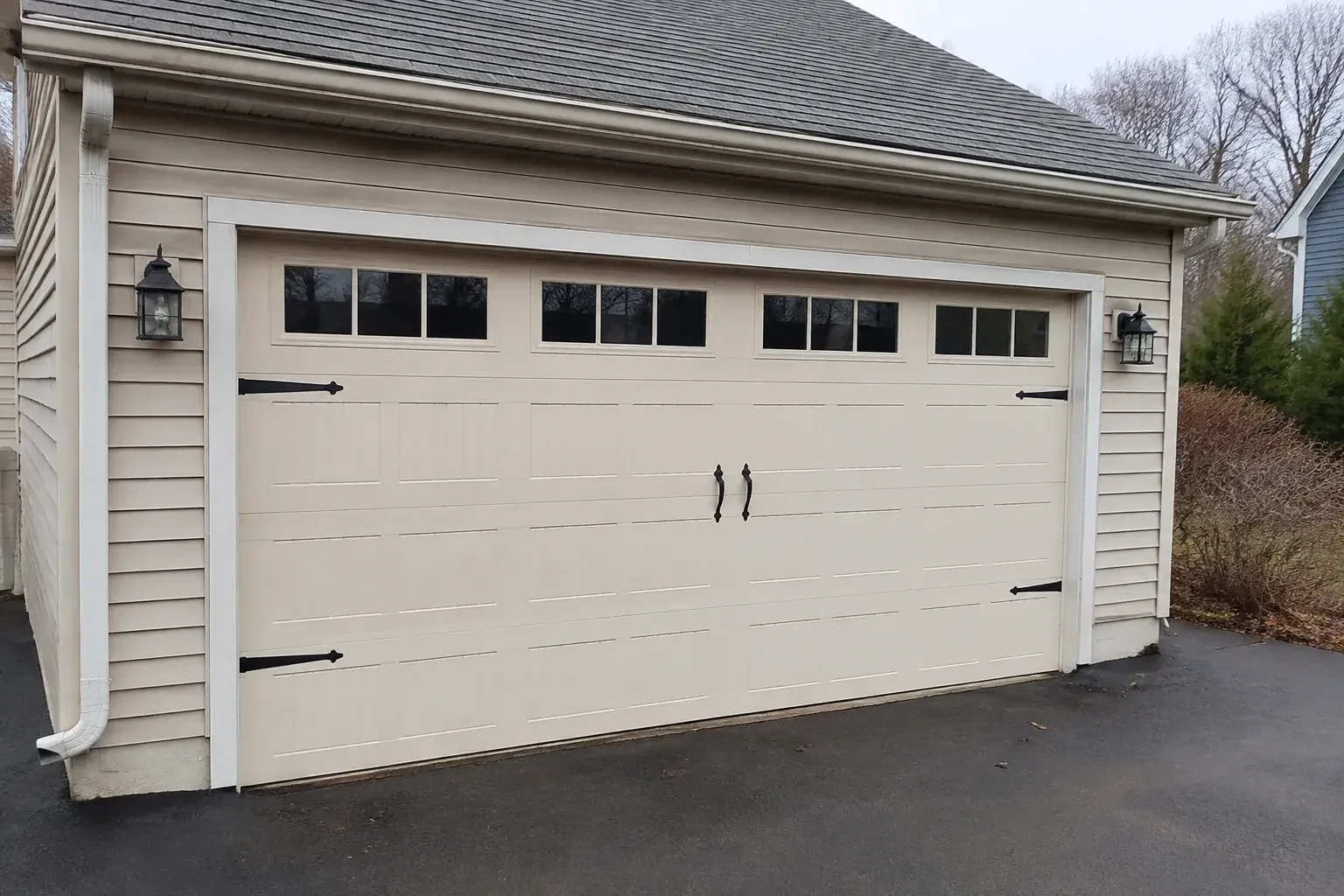
The completed installation includes more than hanging attractive panels. It covers removal planning, opening preparation, tracks, sections, rollers, hinges, springs, cables, seals, opener attachment and decorative pieces. Each component is installed in a planned order, followed by alignment and operating checks. At handover, the homeowner sees how the door moves, how the emergency release works, which routine care applies to the finish and hardware, and what product information should be kept for later reference.
Sound familiar?Thorncrest Village
Carriage-House Garage Door Installation · Thorncrest Village
Scene 1
Selection starts by noting the house features the new door should relate to: roof lines, masonry joints, window proportions, entry-door colour and exterior trim. From there, samples can be compared for panel geometry, overlay depth, grain and sheen. A wide opening may need a different pattern scale than a single opening beside it. Recording these relationships gives the homeowner a reasoned layout, not a collection of decorative pieces chosen independently from the elevation.
Scene 2
Decorative handles and strap accents are dry-positioned against measured centre lines before attachment. The layout follows the approved drawing or sample, with equal offsets and consistent relationships to cross-buck overlays, windows and panel edges. Fasteners go only into locations supported by the section construction and its instructions. The installer then moves each joint through the track curve to confirm clearance. This measured approach makes the details read like purposeful door hardware while preserving the sectional movement behind the traditional appearance.
Scene 3
After installation, the garage presents the divided proportions, window rhythm and hardware cues associated with coach doors, yet the sections travel upward instead of occupying driveway space. Panel lines and accents have been laid out as a complete composition across the opening. From inside, tracks and rollers guide the modern operating system; from the street, the emphasis stays on the chosen carriage pattern. The customer can use the driveway and opener in the familiar way while gaining a noticeably more architectural exterior feature.
What shapes the quoteHumber Valley Garage Door Co.
FeesSame any hour
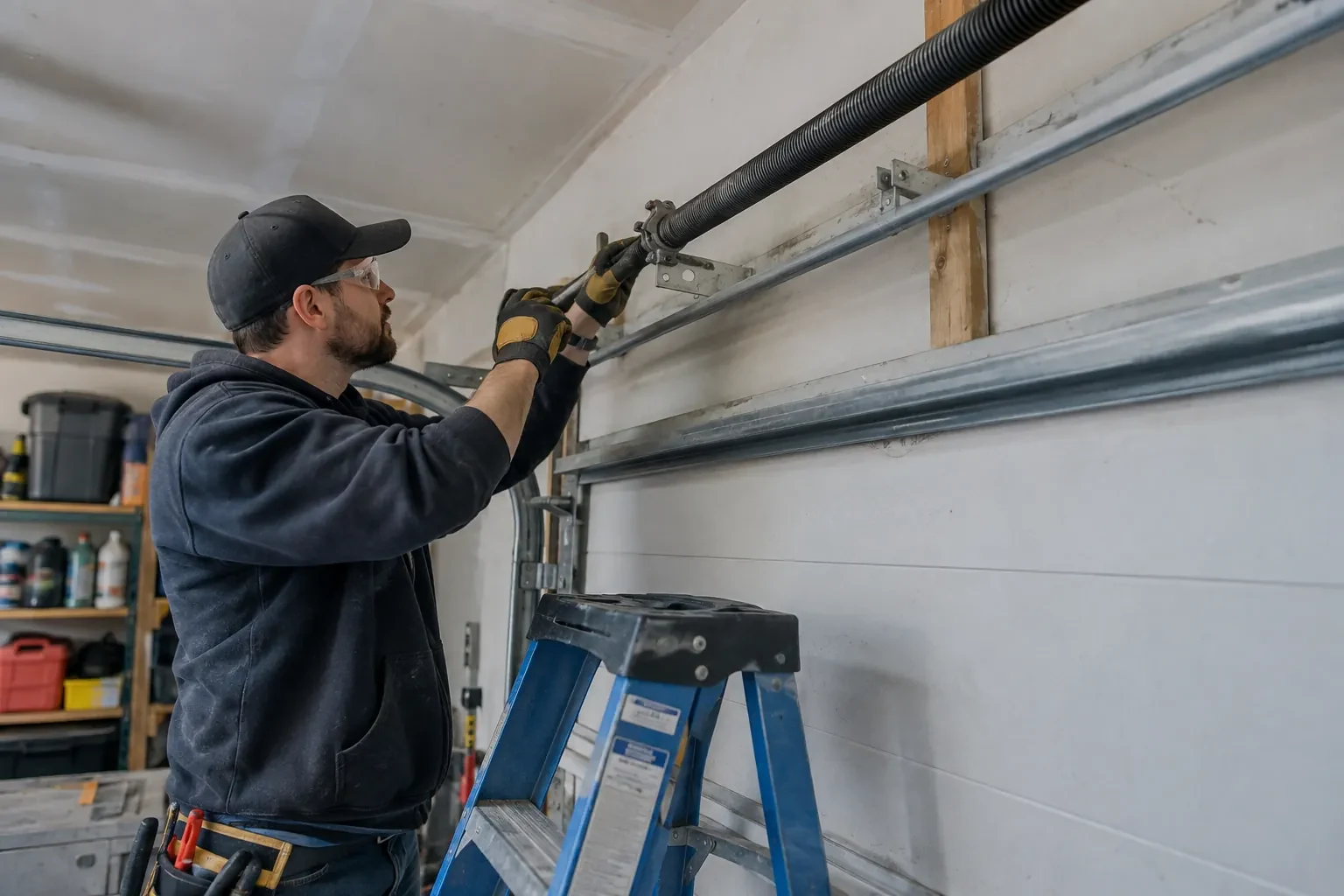
Springs store the force that offsets the door's weight, and lift cables transfer that force through drums or pulleys. Installation requires the door to be secured, the correct components identified and tension applied with purpose-made tools. A trained method keeps the loaded system controlled while balance, cable seating and attachment points are adjusted together for the completed door.
The opener is disconnected and the door is moved manually through its path. Technicians observe the effort required, whether the door stays controlled at intermediate positions, how cables wind on the drums and whether rollers move freely through the track curves. Spring tension and alignment are refined as a system. Powered settings are addressed only after the manual assembly behaves consistently.
On most sectional carriage designs, they are visual accents rather than working swing-door hinges. Their placement still requires care. They must attach where the section construction permits, align evenly across the face and clear trim and joints throughout travel. Some handles can also provide a suitable gripping point for manual movement when their product instructions identify that use.
TorontoOntario
Carriage-House Garage Door Installation · Toronto, Bloordale Gardens, Eringate, Etobicoke, Glen Agar, Islington, Princess Margaret, West Deane Park
Every square is one home in a hundred.
On-site assessment
The existing door has reached the point where panels, rollers and finish all look tired.
(289) 804-5885, open 24/7.
On-site assessment preferred · (289) 804-5885, open 24/7