Sound familiar?Thorncrest Village
- The call
- You moved in three months ago. The door works, but nobody can say how old the springs are, when anyone last looked at it, or whether the little sensors by the floor have ever been tested.
There is a new sound. Last week the door simply hummed up and down; now there is a bang at the top of travel and a scrape on the way back, and you have started standing well back while it moves.
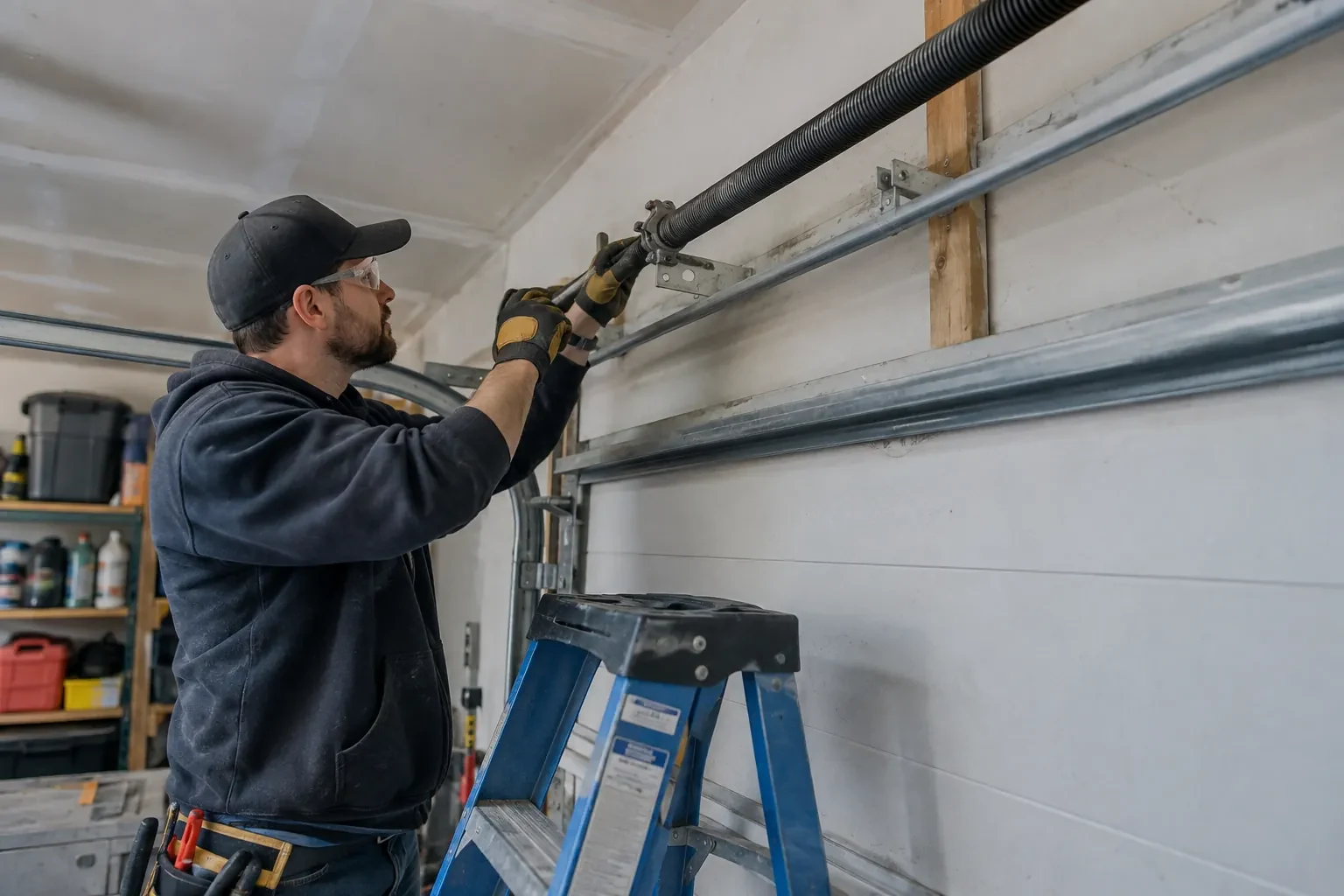
Three tests sit at the heart of the visit. The balance test, done with the opener disconnected, shows whether the springs are still carrying the door's weight or the motor is straining to do it. The contact-reversal test, a flat board laid on the floor, shows whether the door backs off when it meets something solid. The photo-eye test, breaking the beam while the door closes, shows whether the sensors stop it before contact. Each one takes a minute, each answers a different question, and together they tell you the door is doing what it was built to do.
Sound familiar?Thorncrest Village
Garage Door Safety Inspection · Thorncrest Village
Scene 1
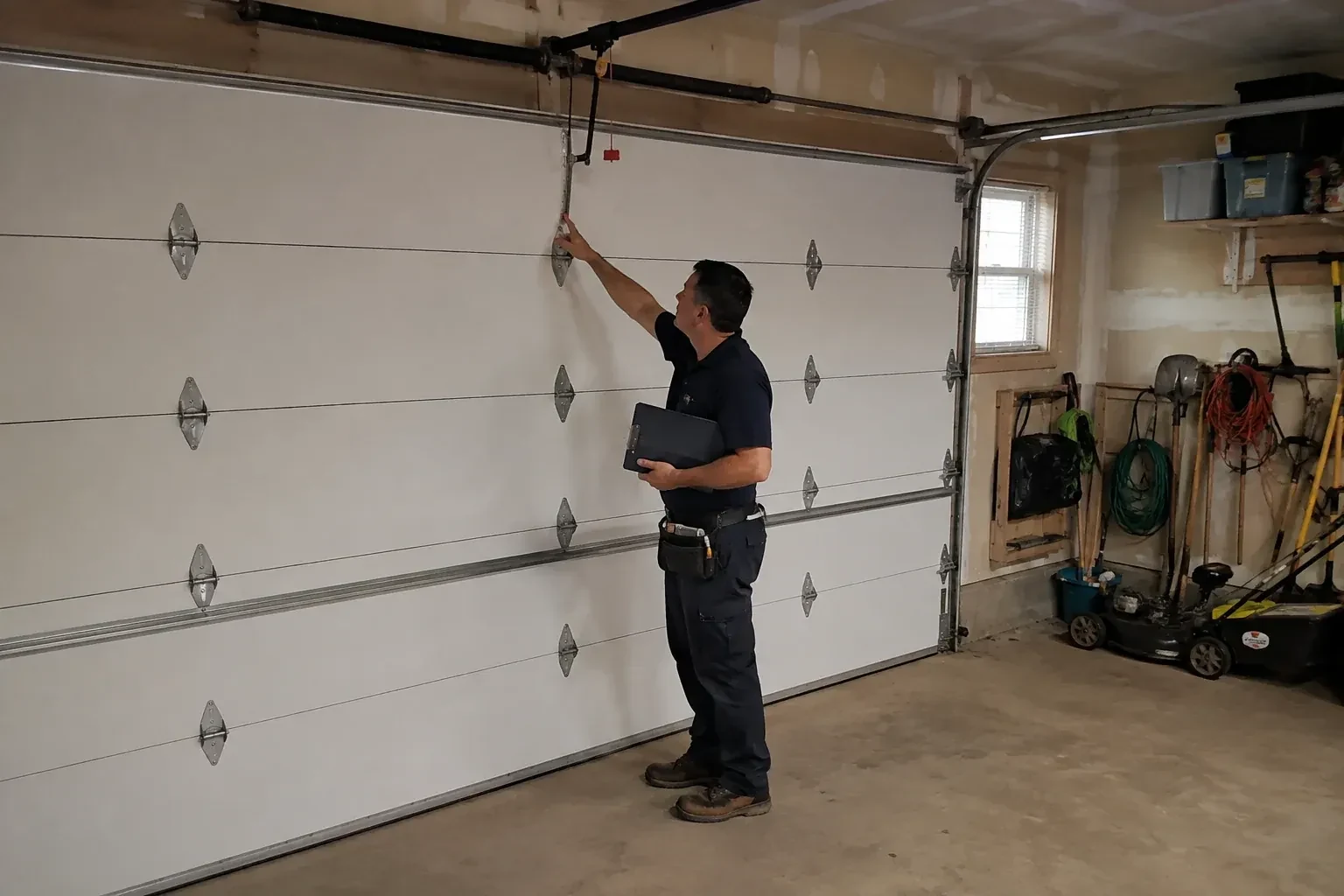
With the door down and the light on, the technician looks at every section from the top down: dents, bowing, cracked stiles, a strut that has come loose. Each hinge is checked for a split leaf or a missing bolt, each roller for a cracked wheel, a bent stem or one that slides instead of turns. The tracks are sighted for plumb and even spacing from the door, and each track bracket and lag into the jamb is checked for tightness. This is unhurried work with a light and a mirror, and it finds the small things, a hinge working loose, a roller stem walking out, that become the big noise next season.
Scene 2
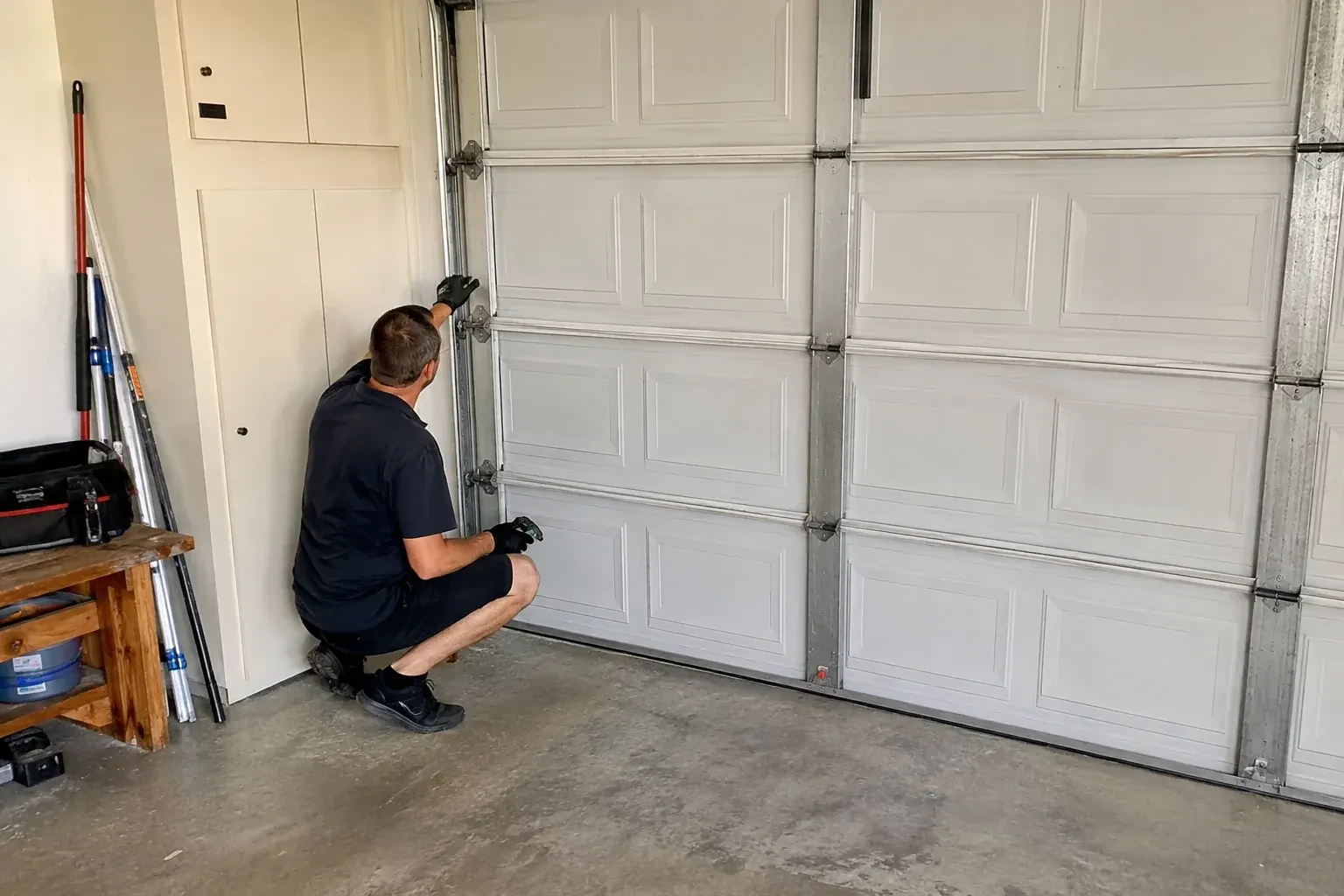
The opener is reconnected and a flat 2x4 offcut is laid on the floor across the centre of the opening. The door is sent down from the wall control. On meeting the board it should stop and reverse to fully open on its own. If it stalls on the board, pushes against it, or only reverses after a long pause, the opener's down-force or travel limit needs attention and the finding goes in the report. Older openers without photo eyes are tested this way too, and their behaviour is recorded against the test the maker specifies. The board is used every time; a hand or foot never stands in for it.
Scene 3
The inspection leaves you with a short routine. Once a month, with the door closed, pull the release cord and lift the door by hand; it should move easily and hold at waist height. Reconnect the opener, lay a flat board on the floor and send the door down; it should reverse when it touches. Then start it closing and wave a broom handle through the photo-eye beam; it should reverse before contact. Each of these takes under a minute and mirrors what the technician did. If any of the three behaves differently from the day of the inspection, that is the moment to call, while it is still a small job.
What shapes the quoteHumber Valley Garage Door Co.
FeesSame any hour
Yes. Older openers rely on contact reversal alone, so the board test carries more weight and is run carefully against the maker's procedure, along with the manual balance check, the force setting and the release. The report records what the opener has and how it performed. An opener built before photo eyes became standard is flagged for replacement in the report, since makers recommend moving off that generation of opener rather than treating photo eyes as a nice-to-have.
A door that still runs after a bump can still be carrying the effects of it. The force travels from the dent into the roller, the track, the bottom bracket and the cable on that side, and any of them can be nudged enough to change how the door hangs. An inspection follows that path and tells you whether the mark is cosmetic, whether a part needs work, or whether the balance has shifted.
Whether the door is single or double and roughly how tall; whether there is a spring on a shaft above the opening or springs along the tracks; the opener make if you can see it; how many doors need looking at; what prompted the call and when it began; and whether anything happened to the door lately. A photo of the opener label and of the spring area is a useful extra.
TorontoOntario
Garage Door Safety Inspection · Toronto, Bloordale Gardens, Eringate, Etobicoke, Glen Agar, Islington, Princess Margaret, West Deane Park
Every square is one home in a hundred.
On-site assessment preferred · (289) 804-5885, open 24/7